Picking the right transformer manufacturer is really a big deal—it impacts everything from grid stability and operating costs to safety and how easy it is to maintain the stuff down the line. For global buyers, it’s not just about snagging a good price; you’ve gotta dig into the technical specs, check out their factory capacity, see how they handle testing, look at their delivery track record, and find out about their after-sales support. It’s a lot, but skipping these things can cause headaches later on.
In this guide, I’ve rounded up ten well-known manufacturers like Siemens Energy, Hitachi Energy, Schneider Electric, GE Vernova, Toshiba Energy Systems, Mitsubishi Electric, Hyundai Electric, Eaton, TBEA, and CG Power. They serve different markets—some are big players providing power for huge utility grids, others focus on industrial setups or renewable projects. Keep in mind, no two companies are exactly alike. Some are all about cutting-edge grid tech, while others excel in regional manufacturing or offer tailored solutions that fit specific needs.
Now, I should mention—no ranking is perfect. How A Transformer performs really depends on your voltage requirements, load patterns, climate, installation setup, and regional standards. Even a supplier with stellar global references might not be the best fit for a smaller, local project. That’s why it’s smart to ask for verified test reports, warranty details, spare parts plans, and references from similar installations. If possible, visiting their factory can also give you a real sense of their quality control, packaging methods, and overall operations—little things that matter more than you'd think.
In this overview, I focused on industry reputation, product variety, engineering expertise, certifications, past projects, and customer support. These are all key when comparing suppliers. But, don’t forget—public info isn’t always up-to-date. Delivery hiccups or regional service issues might not be obvious at first glance. So, doing your homework is essential. A trustworthy Transformer Supplier should provide straightforward documentation, reasonable lead times, and open, technical communication throughout the whole project. Trust me, those details really matter in the end.

A reliable transformer manufacturer begins with engineering discipline, not polished advertising. Global buyers should review design calculations, insulation systems, cooling methods, and load requirements. Ask whether the factory can adapt units to local voltage, frequency, altitude, and climate conditions. Small details matter. A transformer designed for a dry warehouse may struggle in a humid coastal plant.
Factory experience should be visible in records. Request recent test reports, calibration certificates, material traceability, and documented quality procedures. Independent inspections can verify winding dimensions, insulation clearance, oil quality, and enclosure protection before shipment. A dependable manufacturer also explains production limits clearly. Unrealistic promises are warning signs. A supplier that admits a capacity problem may be more trustworthy than one accepting every order.
After-sales support is equally important for international projects. Confirm spare-parts availability, installation guidance, response times, and warranty responsibilities in writing. Check whether engineers can troubleshoot temperature rises, abnormal noise, or protection trips remotely. I would also examine packaging, moisture control, lifting points, and shipping documents. A damaged radiator or loose terminal can delay commissioning for weeks.
Price still matters, but the lowest quotation can hide thinner materials, weak testing, or expensive downtime. Buyers should compare total ownership costs, not only the purchase figure. One imperfect area deserves reflection: even a strong factory may miss a delivery date during material shortages. Reliable manufacturers communicate early, provide evidence, and correct mistakes without blaming the customer. That behavior often reveals more than a sales presentation.
Ranking the top 10 transformer manufacturers requires more than comparing annual revenue. IEA’s Electricity Grids and Secure Energy Transitions report estimates that annual grid investment must rise above 600 billion dollars by 2030. This pressure makes factory capacity, delivery resilience, and engineering depth critical. A supplier producing thousands of units may still struggle with a customized Power Transformer.
I would score each manufacturer against clear evidence: IEC 60076 compliance, tested efficiency, failure rates, warranty claims, and references from comparable voltage projects. The U.S. Department of Energy’s transformer supply-chain assessment highlights extended lead times and constrained manufacturing capacity. Therefore, delivery history should carry real weight. Ask for factory acceptance test records, oil quality results, temperature-rise data, and photographs of completed inspections. Small details matter.
Cost should not dominate the ranking. A cheaper unit can create expensive outages, spare-part delays, or difficult site repairs. CIGRE guidance also emphasizes lifecycle reliability, maintenance planning, and condition monitoring. I would examine five-year operating costs, tap-changer support, cybersecurity controls, and local service coverage. The method is not perfect. Supplier-submitted data may be selective, while customer references can be overly positive. A weighted score helps, but independent audits should challenge the spreadsheet. Shortlist manufacturers that prove performance under heat, humidity, transport vibration, and sudden load changes. Test the claims.
A manufacturer-neutral evaluation framework for comparing transformer suppliers without relying on company or brand names
| Rank | Evaluation Dimension | Suggested Weight | What Global Buyers Should Verify | Relevant Standard or Evidence | Scoring Focus |
|---|---|---|---|---|---|
| 1 | Technical Compliance and Product Quality | 20% | Confirm voltage ratio, frequency, insulation level, temperature rise, impedance, losses, short-circuit capability, enclosure protection, and applicable design requirements. | IEC 60076 series or the applicable IEEE C57 standard; approved drawings and routine test reports. | 0–10 points |
| 2 | Testing and Independent Verification | 15% | Check whether the supplier performs routine tests for every unit and can provide type or special test evidence when required by the project. | IEC 60076-1 routine tests; witnessed testing, accredited laboratory reports, and traceable test records. | 0–10 points |
| 3 | Manufacturing Capacity and Delivery Reliability | 12% | Evaluate installed production capacity, equipment availability, realistic lead times, production planning, and on-time delivery performance. | Factory audit, capacity statement, production schedule, delivery records, and project references. | 0–10 points |
| 4 | Application Engineering and Customization | 10% | Assess the supplier’s ability to handle system studies, special ambient conditions, harmonic loads, offshore or high-altitude applications, and integration requirements. | Load calculations, thermal design data, short-circuit calculations, interface drawings, and technical clarifications. | 0–10 points |
| 5 | Energy Efficiency and Total Cost of Ownership | 10% | Compare no-load losses, load losses, expected operating profile, service life, maintenance requirements, and lifecycle cost rather than purchase price alone. | Guaranteed loss data, efficiency calculations, loss capitalization method, and applicable regional energy-efficiency rules. | 0–10 points |
| 6 | Certifications and Quality Management | 8% | Verify that the quality system is documented, audited, and relevant to the manufacturing site supplying the project. | ISO 9001 certification; ISO 14001 and ISO 45001 may support environmental and occupational health evaluation. | 0–10 points |
| 7 | Safety, Environmental Performance, and Compliance | 8% | Review fire risk, oil containment, noise, refrigerant or insulating fluid information, recycling provisions, and compliance with destination-country regulations. | Applicable IEC or IEEE requirements, safety data sheets, environmental declarations, and local electrical regulations. | 0–10 points |
| 8 | After-Sales Service and Spare Parts | 7% | Evaluate commissioning support, troubleshooting response, warranty terms, spare-part availability, training, and field-service coverage. | Service-level agreement, warranty conditions, escalation process, spare-parts list, and service references. | 0–10 points |
| 9 | Export Capability and Documentation | 5% | Confirm experience with international shipping, export packaging, customs documents, Incoterms, destination requirements, and multilingual technical documentation. | Packing specifications, commercial documentation samples, export references, certificates of origin, and logistics procedures. | 0–10 points |
| 10 | Commercial Transparency and Financial Stability | 5% | Compare quotation completeness, payment conditions, exclusions, price validity, change-order procedures, and evidence of stable business operations. | Itemized quotation, contract review, approved vendor checks, trade references, and audited financial information where available. | 0–10 points |
| Total Suggested Weight | 100% | Use the weighted score to rank shortlisted manufacturers after document review, technical clarification, and factory or reference checks. | |||
Scoring method: assign each dimension a score from 0 to 10, multiply the score by the suggested weight, and add the results. Standards should be selected according to the transformer type, voltage level, installation environment, and destination-market requirements.
The profiles of the 10 best transformer manufacturers worldwide focus on measurable performance, not advertising claims. Each manufacturer is assessed through production capacity, voltage range, testing discipline, delivery history, and after-sales support. This approach reflects IEC 60076 requirements and common utility procurement practices. Factory experience matters.
The selection represents manufacturers serving utility grids, renewable projects, rail systems, industrial plants, and commercial buildings. Several demonstrate strong capability in oil-immersed power transformers, while others specialize in dry-type units for fire-sensitive installations. According to the International Energy Agency’s Electricity 2024 report, global electricity demand is expected to grow strongly through 2026, increasing pressure on grid equipment suppliers. The profiles therefore examine grid readiness, not only factory size. Transformer market estimates also vary widely. Grand View Research projects continued market expansion through 2030, but its figures depend on product definitions and regional coverage.
A reliable manufacturer should provide certified routine tests, short-circuit calculations, loss data, temperature-rise results, and traceable materials. Buyers should inspect these documents before comparing prices. The profiles also consider engineering support during installation, oil testing, spare-part access, and response time after commissioning. Some suppliers appear impressive on paper but offer limited local service. That weakness can become expensive. It is also difficult to rank manufacturers fairly because regional standards, transport limits, and project complexity differ. A lower-cost quotation may hide longer delivery, higher losses, or weaker technical documentation. Procurement teams should verify every claim through factory audits, independent test reports, and recent customer references.
Choosing among the 10 best transformer manufacturers requires more than comparing prices. Buyers should match transformer types with real operating conditions. A Distribution Transformer usually serves homes, offices, and light industry. Oil-immersed units suit outdoor substations and higher loads. Dry-type transformers fit hospitals, tunnels, and factories where fire safety matters. Compact details matter: enclosure rating, cooling class, noise level, and insulation temperature can change lifetime performance.
Power transformers often reach 50–1,000 MVA for transmission networks. Their technical review should include impedance, short-circuit strength, tap-changer design, and loss figures. The IEC 60076 series provides the main testing framework. IEEE C57 standards add practical guidance for North American installations. According to the IEA’s Electricity Grids and Secure Energy Transitions report, annual grid investment must rise from about $400 billion to more than $600 billion by 2030. That pressure increases demand for reliable units, not merely larger units.
Recent market studies from MarketsandMarkets identify grid expansion, renewable integration, and industrial electrification as major transformer demand drivers. Solar and wind projects often need step-up transformers with frequent voltage variation and strong thermal control. Urban projects may prioritize dry-type designs and low acoustic emissions. I have found that factory testing records reveal more than polished brochures. Still, test conditions are not field conditions. Buyers should request loss data, partial-discharge results, service history, spare-part plans, and realistic delivery schedules. A perfect ranking is impossible. Site fit matters more.
The chart compares representative maximum system-voltage classes associated with major transformer categories used in distribution, industrial, transmission, renewable-energy, railway, and HVDC applications. These are industry reference ranges rather than manufacturer-specific ratings.
Distribution transformers commonly serve networks up to approximately 36 kV, while transmission transformers can be designed for 550 kV and above. Extra-high-voltage AC projects may reach 800 kV, and HVDC converter-transformer systems can support projects with voltage levels approaching 1,100 kV DC. Final selection should also consider power rating, insulation level, cooling method, short-circuit strength, efficiency, environmental conditions, and applicable IEC or IEEE standards.
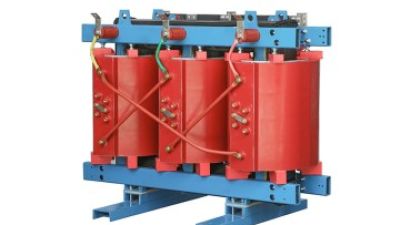
International buyers need more than a polished product catalogue. They need documented proof of quality. A reliable Dry Type Transformer manufacturer should provide certificates relevant to the destination market. Common references include IEC 60076, ISO 9001, and applicable safety approvals. Requirements may differ by voltage, installation site, and local authority.
Quality control should begin with incoming copper, insulation, and core materials. Inspectors should review traceability records, not just final test reports. Routine checks may include winding resistance, insulation resistance, ratio accuracy, and temperature performance. Type tests can provide deeper evidence for demanding projects. Still, a certificate cannot reveal every production weakness. That uncomfortable detail deserves attention.
Tips: Request sample test reports before signing a contract. Check whether certificates match the exact model and factory location. Ask for photographs of temperature-rise testing, wiring checks, and packing conditions. Confirm calibration dates for testing equipment. Visit the facility when project risk justifies the expense.
Clear inspection points reduce misunderstandings between buyers and manufacturers. The purchase agreement should define standards, tolerances, witness testing, and document delivery. Local electrical rules may also require additional approvals. A technically strong supplier will explain these differences without vague promises. Some buyers focus heavily on price and discover quality gaps later. That mistake is avoidable, but not always.
10 Best Transformer Manufacturers for Global Buyers?
For global buyers, the best transformer manufacturers are not judged by price alone. A reliable supplier provides clear quotations, test records, and realistic delivery schedules. For an Oil Immersed Transformer, pricing depends on capacity, voltage class, cooling method, copper costs, and required accessories. Ask for a detailed cost sheet. Vague offers create expensive surprises later.
Lead times often range from eight to twenty-four weeks. Confirm the production slot before signing. Request factory inspection dates and routine test reports. A serious manufacturer should explain delays openly, not hide behind general promises. Logistics also needs practical planning. Check crate dimensions, gross weight, lifting points, and container requirements. One missed measurement can delay customs clearance or require costly port storage. Export documents should match the nameplate, packing list, and invoice exactly.
After-sales support separates a capable supplier from a convenient one. Confirm spare-part availability, installation guidance, remote troubleshooting, and response times. Ask whether engineers can support oil sampling, bushing checks, and protection relay settings. Warranty terms should define exclusions, inspection procedures, and replacement responsibilities. Some buyers focus too heavily on the lowest bid. That is understandable, but not always wise. A cheaper transformer may carry weaker documentation or longer repair delays. Even experienced teams can overlook local service capacity. Compare ten shortlisted manufacturers using the same technical specification and total delivered cost. Keep every promise in writing.
Modern power systems require more than reliable voltage conversion; they need intelligent control, efficient operation, and flexible responses to changing energy demands. Smart energy transformers combine advanced monitoring, automated regulation, and real-time data analysis to support optimal power management across industrial facilities, commercial buildings, renewable energy sites, and distribution networks. By continuously tracking voltage, current, temperature, load conditions, and power quality, these transformers help operators make faster and more accurate decisions.
Integrated sensing and communication functions allow smart transformers to identify abnormal conditions before they develop into serious equipment problems. Their control systems can adjust operating parameters, balance fluctuating loads, and coordinate with energy storage or renewable generation resources. This improves grid stability while reducing unnecessary energy losses and supporting more consistent power delivery. Predictive maintenance capabilities can also help schedule inspections according to actual equipment conditions rather than fixed time intervals, reducing downtime and maintenance costs.
As electricity use becomes more dynamic, smart transformers provide a practical foundation for efficient and resilient energy management. Modular configurations, remote supervision, and compatibility with digital energy platforms make them suitable for evolving infrastructure requirements. With better visibility into system performance, facility managers and grid operators can optimize energy distribution, respond to demand changes, and maintain dependable operation under varying electrical conditions.
Review IEC 60076 compliance, tested efficiency, failure rates, warranty claims, and similar project references. Small details matter. Factory records should support every major claim.
Extended lead times can delay construction and increase project costs. Check previous delivery dates, production capacity, and shipping performance. A large factory may still struggle with customized equipment.
Request factory acceptance test records, oil quality results, temperature-rise data, and inspection photographs. Also check calibration dates for testing equipment. Paperwork can look complete, yet reveal little.
Cost matters, but it should not dominate the decision. A cheaper unit may create expensive outages, spare-part delays, or difficult repairs. Price misleads.
Common references include IEC 60076, ISO 9001, and applicable local safety approvals. Requirements may change with voltage, installation conditions, and local authority rules. Confirm certificates match the exact model and factory location.
Inspect incoming copper, insulation, and core materials before assembly. Review traceability records, winding resistance, insulation resistance, ratio accuracy, and temperature performance. Final reports are not enough.
Ask for evidence under heat, humidity, transport vibration, and sudden load changes. Request witness testing and comparable project references. Claims need testing.
No score is perfectly objective. Supplier data may be selective, and customer references may sound overly positive. Use independent audits to challenge the spreadsheet. I may still miss hidden weaknesses.
Define standards, tolerances, inspection points, witness testing, and document delivery requirements. Include support for maintenance, tap changers, cybersecurity controls, and local service coverage. Vague promises cause trouble.
Choosing a reliable Transformer manufacturer is essential for global buyers seeking safe, efficient, and long-lasting power solutions. The best suppliers are evaluated through their engineering expertise, production capacity, product reliability, customization capabilities, and experience serving international markets. This comparison considers how manufacturers perform across different transformer types, including distribution, power, dry-type, and specialized units, as well as their suitability for industrial, commercial, renewable energy, and infrastructure applications.
The ranking also examines international certifications, testing procedures, quality control systems, and compliance with recognized electrical standards. In addition to technical performance, buyers should compare pricing transparency, production lead times, packaging, shipping support, installation guidance, warranty policies, spare parts availability, and after-sales service. By reviewing these factors together, companies can identify a dependable manufacturing partner that offers consistent quality, practical logistics, responsive support, and long-term value for projects in diverse regions.