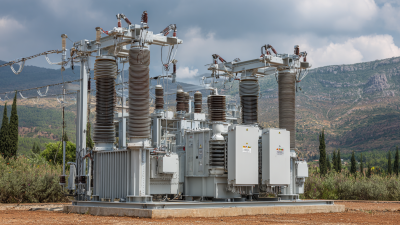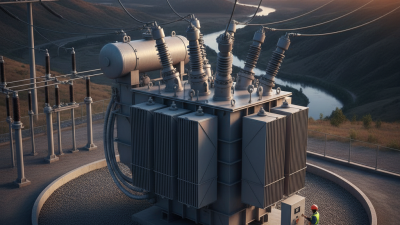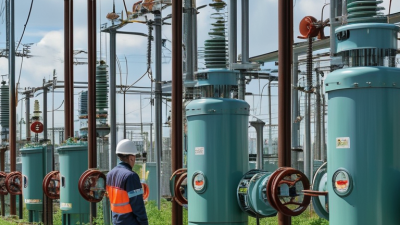
China has really stepped up as a go-to source for dependable power equipment, especially for utility grids, industrial setups, and renewable energy projects. You’ll find that some of the top manufacturers here produce Oil Filled Transformersthat are used in substations, factories, data centers, and even rural power networks. Companies like TBEA, China XD Electric, Jiangsu Huapeng Transformer, Baoding Tianwei Baobian, and Sunten Electric often come up when international buyers are shopping around.
But here’s the thing—these manufacturers aren’t all the same. Some really specialize in ultra-high-voltage systems, while others focus on smaller, more compact Distribution Transformers. When you're evaluating your options, it’s a good idea to compare specs like rated capacity, voltage ratio, impedance, cooling method, insulation design, and short-circuit strength. Don’t forget to check what kind of factory testing they do, too. Ask for temperature-rise data, dielectric test results, oil-sealing records, and proof that they meet IEC 60076 or local standards.
At the end of the day, a shiny brochure doesn’t tell the whole story. A solid transformer should arrive with clean bushings, tight gaskets, clear oil-level indicators, and proper transport fittings to prevent damage. Field engineers will often notice the little things first—noise levels, any seepage around flanges, or the accuracy of monitoring devices. Of course, no manufacturer is perfect, and delays, communication issues, or vague warranty info can still pose risks. That’s why this guide recommends looking into their technical experience, production capacity, quality controls, ability to customize, and after-sales support.
It’s also smart to ask for certifications, take a look at past projects, and request recent test reports before making a decision. Remember, the biggest supplier isn’t always the best choice. The real winner is the one who can match the transformer’s design to your specific grid conditions, installation site, and maintenance capabilities. Finding that perfect fit is what really counts.
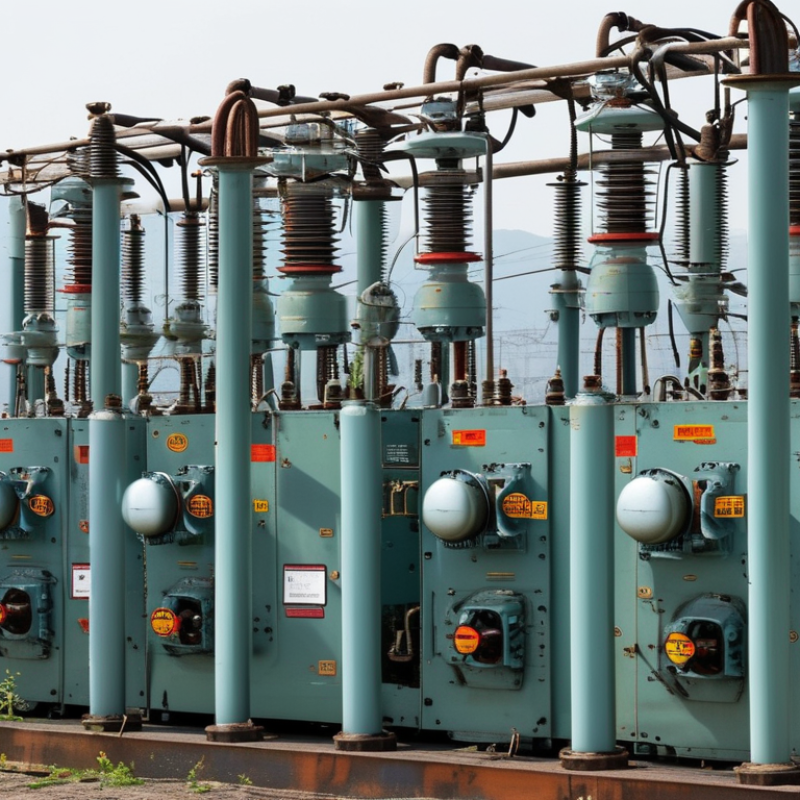
China’s oil-filled transformer industry covers many utility and industrial requirements at 50 Hz. Common ratings range from 6 to 35 kV, with capacities from 10 to 2,500 kVA. Manufacturers usually adapt tank design, cooling paths, and protection systems to local operating conditions. An Oil Filled Power Transformer uses insulating oil to transfer heat from the windings to the tank walls. This supports stable operation when loads remain within the rated range. A 10 kVA unit may serve a small facility, while a 2,500 kVA model can supply a larger workshop or distribution station. Selection should consider load growth, short-circuit conditions, altitude, and installation space.
Tips: Confirm both high-voltage and low-voltage ratings. Check the 50 Hz requirement. Request temperature-rise and insulation test records. Inspect oil sealing details, radiator welds, bushings, and the conservator system. Ask whether routine testing follows recognized electrical standards. Small omissions matter.
Professional evaluation should examine more than a polished enclosure. Core losses, impedance tolerance, noise, and oil quality can affect operating cost over many years. A clear factory test report improves reliability, but it does not replace site verification. I would question any supplier offering precise performance claims without test conditions. Installation quality also remains important. Poor grounding or blocked ventilation can damage a correctly manufactured transformer. The industry is technically mature, yet specifications are sometimes copied too quickly. Careful review is still necessary.
China’s leading oil filled transformer manufacturers serve utility, industrial, renewable energy, and commercial projects. Their product ranges commonly include distribution transformers, power transformers, and special-purpose units. Oil Filled Transformer Sizes may range from compact 50 kVA models to high-capacity units exceeding 500 MVA. Voltage classes often cover 6 kV, 10 kV, 35 kV, and higher transmission levels.
Experienced manufacturers design tanks, radiators, bushings, and tap changers around actual site conditions. Coastal installations may require stronger corrosion protection. Hot climates demand careful thermal design and suitable oil selection. IEC 60076 compliance should cover design calculations, temperature-rise tests, impulse tests, and short-circuit verification. Factory acceptance documents matter. So does traceability.
Capacity alone can mislead. A large transformer is not automatically the best choice. Engineers should review load profiles, harmonic content, altitude, ambient temperature, and future expansion. Some catalogues simplify these details too much. That deserves caution. Reliable suppliers usually provide drawings, test reports, loss data, and inspection support before shipment. Manufacturing experience is visible in weld quality, leak testing, finishing, and packing protection. Even small documentation errors can delay installation, so technical review should remain practical and exact.
China Top Oil Filled Transformer Manufacturers
Reliable oil-filled transformers depend on controlled thermal performance, not only nameplate capacity. Mineral oil provides insulation between windings and helps transfer heat toward the tank walls. In ONAN cooling, oil circulates naturally, while surrounding air removes heat from external radiators. This simple system has fewer moving parts. It still requires careful design.
A temperature rise of ≤65 K supports stable operation under rated conditions. Manufacturers should verify this through heat-run tests, winding resistance checks, oil sampling, and insulation measurements. Experienced buyers also inspect sealing quality, radiator airflow, and tap-changer performance. Cooper Oil Filled Transformers should be evaluated with the same evidence, not attractive specifications alone. A factory test can pass, yet poor ventilation may increase field temperatures. That point deserves more attention.
Tips: Confirm the stated temperature rise includes the specified ambient temperature. Review test records, oil quality data, and loading assumptions. Check whether cooling paths remain clear after installation. Small installation errors matter. Even a clean design may underperform when maintenance intervals are ignored.
China Top Oil Filled Transformer Manufacturers
Performance Benchmarks: Up to 99.7% Efficiency and ≤0.5% No-Load Loss
Oil-filled transformers are judged by measured losses, not attractive catalog claims. Top manufacturers may report efficiency up to 99.7% under defined loading conditions. No-load loss can reach 0.5% or below, depending on voltage class, core steel, and rated capacity. The U.S. Department of Energy’s transformer efficiency standards emphasize standardized testing and lifetime energy consumption. European Ecodesign requirements also set minimum performance levels for medium-power transformers. These frameworks make factory test reports essential.
Look beyond the headline number. A 1,000 kVA transformer operating at 40% load may show different efficiency from its full-load result. Core joints, winding resistance, oil temperature, and installation voltage all affect field performance. A 0.5% no-load loss equals about 5 kW continuously on a 1,000 kVA unit. That is 43,800 kWh yearly before load losses. Small losses accumulate.
Tips: Request IEC 60076 test records, temperature-rise data, and guaranteed loss values. Check whether efficiency uses rated load or actual operating load. Inspect oil sealing, radiators, bushings, and noise data. Independent inspection helps. One caveat remains: performance figures are not perfectly comparable across suppliers. Different test tolerances and operating assumptions can quietly distort rankings. A careful buyer should verify every number against the project duty cycle.
When evaluating China’s top oil filled transformer manufacturers, quality systems deserve close inspection. ISO 9001 should control design reviews, supplier checks, production records, and corrective actions. A certificate alone is not proof. Auditors should verify traceability from incoming steel to the finished transformer. Serial numbers, inspection dates, and torque records should match.
Type testing reveals performance under demanding conditions. Reliable manufacturers test temperature rise, impulse withstand, short-circuit strength, and sound levels. Test laboratories should use calibrated instruments and documented procedures. Recent reports matter more than attractive brochures. During a factory visit, engineers may inspect winding insulation, tank welds, and pressure-release devices. Small details often expose weak control.
The 1,000-hour oil aging evaluation adds practical evidence. Samples can be heated under controlled conditions, then checked for acidity, dielectric strength, moisture, and dissipation factor. Engineers should compare fresh and aged oil results. The evaluation must record temperature, oxygen exposure, sampling intervals, and laboratory methods. Keep the records clear. Oil behavior varies with formulation and operating stress, so one test cannot predict every field condition. Some manufacturers still need better long-term data sharing. That gap deserves honest discussion. Proper review combines test evidence, production experience, and transparent technical communication.
Selecting China top oil-filled transformer manufacturers for export requires more than a low quotation. In field inspections, I start with voltage and insulation coordination. The specified primary and secondary voltages must match the network, tap range, and local operating practice. A small mismatch can create persistent service problems. Impedance deserves equal attention. It affects fault current, voltage regulation, and parallel operation. Ask for guaranteed impedance tolerance, not a rounded catalogue figure.
Loss data should separate no-load loss, load loss, and auxiliary consumption. Request test conditions, reference temperature, and measurement tolerance under IEC 60076. These details make offers comparable. During acceptance reviews, I check routine test records against the quoted design values. The phrase Cooper Transformers Oil Filled may appear in a search brief, but technical evidence matters more than wording. Certified reports, traceable instruments, and documented factory procedures strengthen reliability.
Climate selection is often underestimated. For hot, humid, dusty, or coastal sites, confirm temperature rise, sealing, corrosion protection, and oil preservation. Altitude also changes cooling performance and insulation requirements. Ask whether the design uses mineral oil or another approved insulating liquid, and verify applicable safety documentation. A factory may provide excellent data, yet packaging and transport planning can still fail. I have seen sound transformers arrive with damaged bushings after weak securing. That lesson is easy to overlook. Use IEC 60076 data sheets, witnessed tests, and clear warranty terms before comparing export suppliers.
| Selection Dimension | Typical Export Specification or Range | Why It Matters | Relevant IEC 60076 Reference | Recommended Verification Data |
|---|---|---|---|---|
| Rated Power | Common distribution ratings include 50, 100, 160, 250, 400, 630, 800, 1000, 1250, 1600, 2000 and 2500 kVA. | Determines continuous load capability, cooling requirements, transport weight and installation footprint. | IEC 60076-1; IEC 60076-7 | Guaranteed rating, cooling mode, ambient assumptions, dimensions, mass and verified temperature-rise report. |
| High-Voltage Winding | Typical medium-voltage primary ratings: 3.3, 6, 6.6, 10, 11, 13.8, 15, 20 and 22 kV; higher system voltages require a different design class. | Must match the utility system voltage, insulation coordination and network grounding arrangement. | IEC 60076-1; IEC 60076-3 | Rated voltage, highest voltage for equipment, neutral insulation, impulse withstand level and power-frequency withstand level. |
| Low-Voltage Winding | Typical secondary ratings: 400 V, 415 V, 433 V, 480 V or 690 V, depending on the destination network. | Affects the usable line-to-line voltage, fault current and compatibility with downstream equipment. | IEC 60076-1 | Secondary voltage, frequency, vector group, neutral terminal arrangement and tap-position voltage table. |
| Frequency | 50 Hz or 60 Hz; the transformer should be designed and tested for the specified frequency. | Frequency influences core flux, no-load current, losses and heating. | IEC 60076-1 | Rated frequency, no-load loss test frequency and confirmation that all performance guarantees use the same frequency. |
| Vector Group | Common distribution configurations include Dyn11, Dyn1 and Yyn0; the correct group depends on the network design. | Controls phase displacement, neutral availability and parallel-operation compatibility. | IEC 60076-1 | Vector-group test, polarity confirmation, phase displacement and parallel-operation requirements. |
| Tap Changer | Off-circuit tap ranges commonly include ±2 × 2.5% or ±5%; on-load tap changers are specified separately where voltage regulation is required. | Provides voltage adjustment for supply variation and load-related voltage drop. | IEC 60076-1; IEC 60214-1 for tap changers | Tap positions, voltage ratio at each position, switching method, interlocks and operating instructions. |
| Short-Circuit Impedance | Typical distribution-transformer values are approximately 4% to 6% at rated power and frequency; the project value must be calculated for system fault levels. | Influences fault current, voltage regulation and load sharing when transformers operate in parallel. | IEC 60076-1 | Guaranteed impedance at principal tap, tolerance, resistance/reactance components and short-circuit withstand calculation. |
| No-Load Loss | Specified in watts or kilowatts and measured at rated frequency and rated voltage; lower-loss core designs generally reduce continuous energy consumption. | Occurs whenever the transformer is energized, even with little or no load. | IEC 60076-1; IEC 60076-10 | Guaranteed no-load loss, no-load current, measurement voltage, frequency and applicable efficiency or energy regulations. |
| Load Loss | Specified at a defined reference temperature, commonly 75 °C or 85 °C depending on the project specification and applicable national requirements. | Represents conductor and stray losses under load and directly affects operating cost and temperature rise. | IEC 60076-1; IEC 60076-10 | Load loss at rated current, reference temperature, correction method, winding resistance and stray-loss test result. |
| Efficiency and Total Loss Evaluation | Evaluate total loss at the actual load profile rather than comparing efficiency at only one loading point. | A transformer with a low no-load loss may be preferable for lightly loaded renewable, commercial or standby applications. | IEC 60076-1; IEC 60076-20 where applicable | Annualized energy-loss calculation using the expected load-duration curve and local electricity price. |
| Cooling and Temperature Rise | Common oil-immersed distribution designs use ONAN cooling; typical guaranteed top-oil and average-winding temperature-rise limits are project-specific and often around 55 K to 65 K. | Controls insulation ageing, enclosure heat rejection and permissible continuous loading. | IEC 60076-2; IEC 60076-7 | Cooling designation, temperature-rise test, hot-spot calculation, fan or pump requirements and overload capability. |
| Ambient Climate | Confirm minimum and maximum ambient temperature, daily average, annual average, solar radiation, altitude, humidity, salt mist and pollution level. | Climate conditions affect cooling performance, condensation, corrosion, insulation ageing and derating. | IEC 60076-1; IEC 60076-2; IEC 60076-7 | Design ambient, altitude correction, enclosure coating system, anti-condensation measures and derating curve. |
| Altitude | Installations above 1000 m require evaluation of external insulation and cooling conditions; the exact correction depends on the design and project specification. | Reduced air density lowers heat dissipation and may require insulation or rating adjustments. | IEC 60076-1; IEC 60076-2; IEC 60076-3 | Site elevation, corrected temperature rise, external clearances, insulation levels and capacity derating. |
| Insulating Liquid | Mineral insulating oil complying with the specified IEC or national requirement; alternative liquids require separate thermal, fire and compatibility assessment. | Oil quality affects dielectric strength, ageing, cooling, maintenance and fire risk. | IEC 60076-1; IEC 60296; IEC 60422 | Oil type, inhibited or uninhibited status, breakdown voltage, water content, acidity, interfacial tension and dissipation factor. |
| Insulation Level | Specify lightning impulse withstand and power-frequency withstand according to the highest voltage for equipment and local insulation-coordination rules. | Ensures the transformer can withstand lightning and switching overvoltages on the destination network. | IEC 60076-3 | Routine and type-test evidence for applied-voltage, induced-voltage and lightning-impulse tests where required. |
| Dielectric and Routine Tests | Factory routine tests should be completed for every unit before shipment; type and special tests depend on the purchase specification. | Provides evidence that the delivered unit meets electrical, mechanical and thermal performance requirements. | IEC 60076-1; IEC 60076-3; IEC 60076-5 | Signed test certificate covering ratio, polarity, winding resistance, impedance, losses, dielectric tests and leak inspection. |
| Short-Circuit Withstand | Verify the transformer against the prospective system fault current and clearing time; test requirements are specified according to the transformer rating and application. | Confirms mechanical strength of windings and clamping structures during external faults. | IEC 60076-5 | Calculated withstand current, duration, peak current, design report and available type-test evidence. |
| Sound Level | Specify the guaranteed sound-pressure or sound-power level and the measurement distance or test method. | Important for residential, commercial, hospital and urban substations. | IEC 60076-10 | Sound-test report, measurement environment, correction factors and guaranteed maximum level. |
| Enclosure, Corrosion and Accessories | Typical accessories include a conservator or sealed tank, oil-level indicator, pressure-relief device, thermometer, drain valve, lifting lugs and earthing terminals. | Suitable accessories and coating systems improve safety, inspection, maintenance and service life in the destination environment. | IEC 60076-1; IEC 60076-22 series where applicable | General-arrangement drawing, accessory list, paint system, ingress or corrosion requirements, leak test and packing specification. |
| Documentation and Export Readiness | Provide an English technical offer, datasheet, drawings, installation manual, inspection and test plan, routine-test certificates, packing list and nameplate data. | Complete documentation reduces customs, installation, commissioning and warranty risks. | IEC 60076-1 and project contract requirements | Document index, revision control, factory-acceptance procedure, spare-parts list, shipping dimensions and country-specific compliance records. |
Note: The values shown are representative engineering ranges for preliminary export selection. Final guaranteed values must be confirmed against the destination utility specification, local regulations, site conditions and the manufacturer’s approved IEC 60076 test documentation.
: They commonly produce distribution, power, and special-purpose oil-filled transformers. Sizes may range from 50 kVA to over 500 MVA. Voltage classes often include 6 kV, 10 kV, and 35 kV.
It should cover design calculations, temperature-rise tests, impulse tests, and short-circuit verification. Factory acceptance documents should support every major claim. Traceability matters.
No. Capacity alone can mislead. Engineers should review load profiles, harmonics, altitude, ambient temperature, and future expansion. A smaller unit may fit better.
Confirm primary voltage, secondary voltage, tap range, and insulation coordination. Also request guaranteed impedance tolerance. Small voltage mismatches can cause lasting service problems.
Ask for separate no-load loss, load loss, and auxiliary consumption data. Confirm test temperature, test conditions, and measurement tolerance. Rounded catalogue figures are not enough.
Hot, humid, dusty, and coastal sites need special attention. Check temperature rise, sealing, corrosion protection, and oil preservation. Altitude can also affect cooling and insulation.
Request technical drawings, IEC 60076 test reports, loss data, and inspection records. Routine test results should match the quoted design values. Keep records traceable.
Secure bushings, radiators, and other exposed parts carefully before shipment. Use strong packing and clear handling instructions. Good equipment can still arrive damaged. That risk deserves more attention.
Review weld quality, leak testing, surface finishing, and packing protection. Ask about factory procedures and calibrated instruments. I would not rely on photographs alone.
Compare voltage, impedance, losses, climate design, test evidence, and warranty terms. Do not choose only by price. Some catalogues simplify important details.
China’s oil-filled transformer industry serves power distribution and industrial applications across 50 Hz systems, with common ratings from 6 to 35 kV and capacities ranging from 10 to 2,500 kVA. An Oil Filled Transformer typically uses mineral oil insulation and ONAN cooling to provide stable operation, with designed temperature rise controlled at or below 65 K. Leading manufacturers are evaluated by product coverage, production capacity, IEC 60076 compliance, engineering support, and the availability of reliable test documentation.
Important performance indicators include efficiency of up to 99.7% and no-load losses of no more than 0.5%, although actual results depend on the selected specification. Quality assessment should include ISO 9001 systems, type testing, and long-duration oil aging evaluation of approximately 1,000 hours. For export projects, buyers should carefully confirm voltage, impedance, load and no-load losses, ambient climate, cooling requirements, installation conditions, and complete IEC 60076 technical data before selecting a suitable supplier.