National hotline:+86 18809263088
Leave Your Message
0%

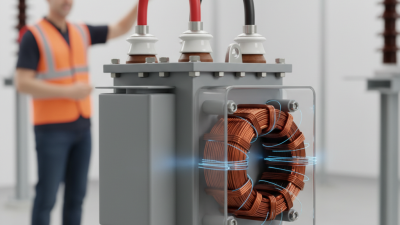
Picking between the many Types Of Transformerisn't just a matter of lining up price, voltage, and catalogue dimensions. The right call really depends on the whole electrical environment around it. How the load behaves matters. So do temperature, the space you've got for installation, maintenance access, noise limits, and how long you expect the thing to last. A dry-type Transformer can be a good fit for an indoor commercial building, since it cuts down on liquid-related worries. An oil-immersed one might be better for outdoor substations and higher power ratings. In the end, the application decides.

As transformer specialist Martin J. Heathcote—author of The J&P Transformer Book—puts it, "The Transformer is one of the most important components in the power system." That's not just theory; it comes from field experience. Even a small mismatch can lead to too much heat, unstable voltage, or avoidable operating losses. Engineers at Schneider Electric, Siemens Energy, ABB, and Hitachi Energy often look at these risks through load studies, insulation needs, cooling methods, and protection coordination. Their published technical standards also make it clear why nameplate data alone can't guide a safe decision.

Real projects are rarely neat and perfect. A factory might add new motors after installation. A building might need harmonic filtering later on. That uncertainty deserves some thought. It's easy to pick a transformer that works today but struggles five years down the road. This guide looks at distribution, isolation, autotransformer, current, potential, dry-type, and oil-immersed designs. Each section ties construction back to practical use. Expect trade-offs, not universal answers. The best Types Of Transformer is the one that fits today's demand, future expansion, operating conditions, and your team's maintenance capability. Careful selection saves energy, reduces downtime, and supports dependable performance. And sometimes? The safest move is to reconsider the first specification.
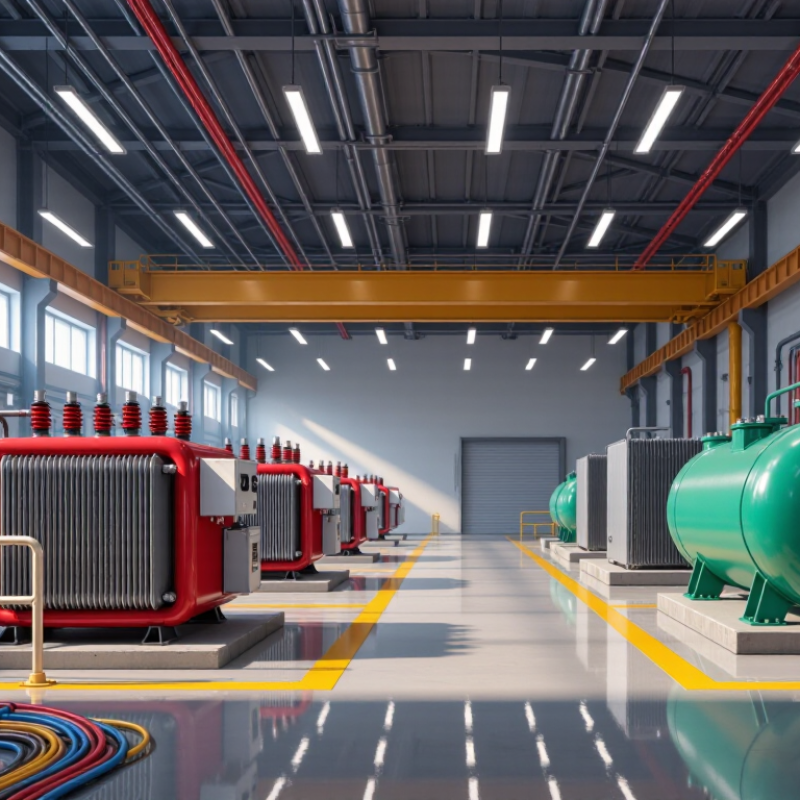
How to Choose the Right Types of Transformer?

Define the Transformer’s Intended Function and Operating Conditions

How to Choose the Right Types of Transformer?

Define the transformer’s intended function before comparing models. Will it reduce voltage, increase voltage, isolate circuits, or support rectifier equipment? Write down the primary and secondary voltages, rated power, frequency, and expected load profile. A motor may create high starting current. A data cabinet may demand cleaner power and tighter voltage regulation. The difference matters.

Operating conditions can change the selection quickly. Record the installation altitude, ambient temperature, humidity, dust level, and available ventilation. Indoor equipment rooms differ greatly from coastal workshops or dusty production floors.

Dry Type Transformer Types include air-insulated, resin-encapsulated, and impregnated designs. Resin-encapsulated units often suit locations needing stronger moisture resistance. Air-insulated designs may work well in clean, ventilated rooms. Check heat dissipation carefully.

Measure the real load when possible, rather than trusting an old nameplate. I have seen lightly loaded transformers selected correctly but installed in cramped enclosures. The temperature then rose beyond expectations. That mistake was avoidable. Consider inrush current, harmonic distortion, short-circuit strength, noise limits, and future capacity. Review temperature-rise data and applicable electrical standards with a qualified engineer. A site inspection can reveal problems that a specification sheet misses. Sometimes, the first selection needs revision.

Compare Transformer Types by Construction and Core Design

How to Choose the Right Types of Transformer?

Compare Transformer Types by Construction and Core Design

Transformer selection becomes clearer when construction is examined before ratings. A core-type transformer places windings around two limbs, allowing easier access and simpler insulation work. A shell-type design surrounds the windings with the magnetic core, improving mechanical support and short-circuit resistance. This difference matters in compact equipment with frequent vibration. Toroidal construction reduces leakage flux and audible hum, but winding it evenly can be difficult. Small gaps may increase losses and temperature.

Core material also changes performance. Laminated steel cores suit many power-frequency applications because thin sheets reduce eddy-current losses. Ferrite cores work efficiently at higher frequencies, especially in compact power converters. Amorphous cores can lower no-load losses, though their mechanical handling requires care. Core shape is not merely a drawing detail. It affects heat paths, winding space, noise, and manufacturing cost.

During a practical inspection, check the winding position, insulation distance, clamping strength, and cooling route. A dry-type unit may suit an indoor installation where fire safety and maintenance access are important. An oil-filled design may handle higher power, but it needs proper containment, monitoring, and ventilation. Do not choose by efficiency alone. A smaller core may look economical, yet it can run hotter under continuous load. I have found that early calculations sometimes miss seasonal temperature changes. Rechecking load profiles, harmonics, and available space prevents expensive redesigns. Temperature rise tells the real story.

Match Voltage, Power Rating, and Phase Requirements

Choosing the right transformer starts with three numbers: voltage, power rating, and phase. Confirm the primary and secondary voltages from measured site conditions, not only drawings. A small mismatch can create overheating, poor motor performance, or unsafe insulation stress. IEEE C57.12.00 and IEC 60076 provide widely used requirements for transformer ratings, testing, and insulation coordination.

Size the transformer in kVA, using actual demand, starting current, and planned expansion. A 100 kVA load does not always need a 100 kVA transformer. Motors, welders, and variable-speed drives can produce sharp inrush or harmonic currents. Leave practical capacity, but avoid excessive oversizing because lightly loaded units may operate inefficiently. The U.S. Department of Energy has estimated that distribution transformers account for roughly 2.5% of national electricity consumption, including no-load and load losses. Small efficiency differences matter over decades.

Phase selection must match the supply and the equipment. Single-phase service suits many light commercial loads, while three-phase transformers usually serve balanced industrial systems. Check phase sequence, neutral requirements, grounding, and unbalanced loads before ordering. Oil Transformer Types can provide strong thermal performance for outdoor applications, but installation rules, containment, and environmental conditions require careful review. Dry-type designs may fit indoor spaces better. I have seen projects fail because future load growth was guessed too confidently. Recheck the assumptions. Then question them again.

Evaluate Efficiency, Cooling, Insulation, and Safety Features

How to Choose the Right Types of Transformer?

Evaluate Efficiency, Cooling, Insulation, and Safety Features

Choosing a transformer starts with its real operating conditions, not its nameplate rating. Measure the expected load, voltage changes, ambient temperature, and daily operating pattern. A unit with low no-load losses may save more energy in a facility that runs continuously. However, a larger transformer can waste energy when its load remains light.

Cooling performance deserves close attention. Dry-type transformers suit many indoor installations because they avoid liquid leakage risks. Liquid-filled units can manage higher heat loads, but they require suitable containment and regular fluid checks. During inspections, look for blocked ventilation, unusual noise, hot connections, and damaged fans. Small details matter. I have seen clean-looking enclosures hide restricted airflow.

Insulation affects service life and reliability. Check the insulation class, temperature rise, moisture resistance, and compatibility with the installation environment. Dust, humidity, chemicals, and frequent overloads can weaken insulation faster than expected. Safety features should include grounding, protective relays, temperature alarms, short-circuit protection, and clear isolation procedures. Fire barriers may also be necessary indoors. Follow applicable electrical codes and use qualified professionals for testing and installation. One reading is never enough. Thermal scans, insulation-resistance tests, and load records provide stronger evidence, although every test has limitations. A careful choice balances efficiency, cooling capacity, insulation strength, and practical safety rather than chasing one impressive specification.

Select the Appropriate Transformer for Each Application

Choosing a transformer begins with the application, not the catalogue. A factory motor line needs strong short-term overload capacity and controlled voltage drop. A solar site may require a step-up transformer, low losses, and tolerance for reverse power flow. For a quiet hospital, acoustic performance and fire safety matter as much as rated power.

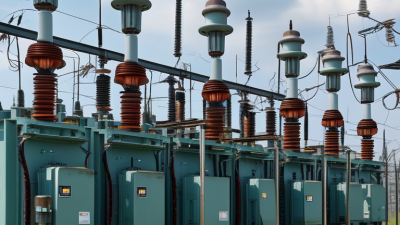
Match voltage, frequency, kVA, insulation, cooling, and duty cycle. Oil-immersed units often suit outdoor substations because they manage heat efficiently. Dry-type transformers fit indoor installations where spill control and simpler maintenance are important. Compare Transformer Lamination Types carefully: grain-oriented electrical steel can reduce core losses, while amorphous metal may provide lower no-load losses. The best choice depends on load behavior, space, noise limits, and lifecycle cost.

IEA’s Electricity Grids and Secure Energy Transitions report estimates that annual grid investment must exceed 600 billion dollars by 2030, about twice today’s level. That expansion increases demand for reliable, efficient transformers. IEC 60076 provides the core framework for transformer design, testing, and performance verification. Still, standards do not replace site knowledge. A unit selected from average load data may overheat during repeated starts. I have seen specifications overlook cable length, harmonics, and future capacity. That mistake is expensive. Leave measured headroom, but avoid excessive oversizing, which quietly increases no-load losses for years.

How to Choose the Right Types of Transformer? - Select the Appropriate Transformer for Each Application

Transformer Type Typical Rating or Voltage Range Best-Fit Applications Key Advantages Important Limitations Selection Factors
Dry-Type Transformer Usually up to 5 MVA Low and medium voltage Indoor commercial buildings, hospitals, schools, industrial facilities, data rooms, and locations where oil containment is undesirable. Uses solid insulation instead of liquid; low fire and spill risk; generally suitable for indoor installation; simpler environmental permitting. Usually larger and noisier than an equivalent liquid-filled unit; heat dissipation and enclosure ventilation must be carefully designed. Check enclosure type, cooling airflow, insulation class, ambient temperature, altitude, sound level, and required short-circuit withstand.
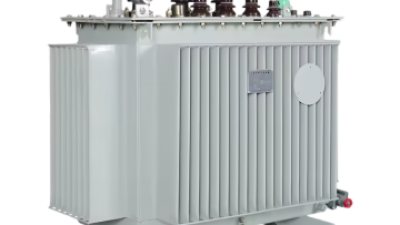
Oil-Immersed Distribution Transformer Commonly 25–2,500 kVA Medium voltage to low voltage Utility distribution, outdoor substations, commercial sites, farms, residential networks, and industrial service entrances. Efficient heat transfer; compact for its rating; widely used for outdoor distribution; generally offers good overload capability when properly specified. Requires oil containment and fire-safety planning; liquid maintenance and leak management are necessary; indoor use may be restricted. Specify mineral oil or an approved alternative fluid, temperature rise, accessory requirements, tank construction, environmental conditions, and fire-protection measures.
Power Transformer Typically above 2.5 MVA High-voltage transmission and grid service Generating stations, transmission substations, large industrial plants, and interconnection points between high-voltage networks. Designed for high power transfer and high system voltages; supports grid step-up and step-down functions; can be equipped with advanced monitoring. High purchase, transport, installation, and maintenance costs; long lead times; requires specialized protection and commissioning. Evaluate MVA rating, voltage ratio, vector group, impedance, tap range, cooling stages, insulation coordination, system fault level, and transport restrictions.
Isolation Transformer Commonly 1:1 Low-voltage systems Medical electrical areas, sensitive control systems, maintenance outlets, test benches, industrial control panels, and noise-sensitive equipment. Provides galvanic separation between primary and secondary circuits; can reduce the propagation of some common-mode disturbances. Does not automatically regulate voltage or eliminate all electromagnetic interference; a grounded shield may be needed for specific noise requirements. Confirm kVA capacity, frequency, insulation level, shield design, leakage current, grounding arrangement, and applicable electrical safety requirements.
Autotransformer Low to high kVA Close voltage ratios Motor starting, voltage adjustment, laboratory supplies, and interconnection of systems with similar voltage levels. Uses less copper and core material than a two-winding transformer with the same rating; typically smaller, lighter, and more efficient. No galvanic isolation between input and output; unsuitable where isolation or enhanced personnel protection is required. Use only when the absence of isolation is acceptable; verify voltage ratio, fault-current implications, regulation, starting duty, and protective coordination.
Step-Up Transformer Secondary voltage higher than primary From low voltage to medium or high voltage Generator outputs, renewable-energy collection systems, laboratory equipment, and transmission or distribution voltage conversion. Raises voltage to reduce current for a given power level, which can reduce conductor losses and support efficient power transmission. Higher voltage creates greater insulation, clearance, creepage, and protection requirements; magnetizing inrush must be considered. Specify input and output voltage, kVA or MVA, frequency, insulation level, impedance, tap requirements, grounding, and harmonic loading.
Step-Down Transformer Medium or high voltage to low voltage Common in distribution systems Building service, industrial machinery, lighting systems, control circuits, battery systems, and low-voltage distribution panels. Supplies usable lower voltages from utility or plant distribution networks; available in many ratings, phase arrangements, and enclosure types. Voltage regulation causes the secondary voltage to vary with load; high inrush current can affect upstream protection and power quality. Calculate continuous and starting loads, diversity, future expansion, secondary voltage, phase configuration, short-circuit current, and available fault protection.
Three-Phase Transformer Industrial and utility power From kVA to MVA ratings Factories, commercial buildings, utility substations, motor-driven equipment, rectifier systems, and balanced three-phase distribution. More compact and efficient than three separate single-phase units for many applications; well suited to balanced three-phase loads. A single internal fault can affect all three phases; replacement and transport may be more difficult than for smaller single-phase units. Choose delta or wye connections, neutral availability, vector group, phase displacement, impedance, grounding method, and load balance.
Single-Phase Transformer Small to medium kVA Single-phase loads Residential service, lighting, control circuits, small machinery, isolated equipment, and installations where phase-by-phase replacement is useful. Simple system design; flexible for small loads; can be installed as individual units or combined into a three-phase bank. Less efficient for large balanced three-phase loads; a bank of units can have more installation space, cabling, and maintenance points. Confirm load current, duty cycle, voltage ratio, frequency, inrush, enclosure, grounding, and whether future three-phase expansion is expected.
Instrument Transformer: Current Transformer (CT) Primary current from amperes to kA Standardized secondary ratings Metering, protective relays, energy monitoring, fault detection, and power-quality measurement in medium- and high-voltage systems. Converts high primary current into a lower measurable current and provides separation between high-power conductors and measurement equipment. The secondary circuit must not be left open while energized; accuracy varies with burden, current level, saturation, and protection class. Specify ratio, accuracy class, burden, knee-point voltage for protection CTs, insulation level, window size, and shorting-terminal arrangements.
Instrument Transformer: Voltage Transformer (VT/PT) High voltage to standardized measurement voltage Metering or protection duty Voltage measurement, revenue metering, synchronization, protective relaying, and high-voltage system monitoring. Reduces system voltage to a standardized, measurable level while providing electrical separation for meters and relays. Accuracy can be affected by burden, ferroresonance, grounding, and frequency; primary protection and correct fusing are essential. Check ratio, accuracy class, burden, phase connection, grounding method, insulation level, ferroresonance protection, and system fault conditions.
Rectifier Transformer Application-specific kVA or MVA AC supply for power conversion Industrial drives, electrolysis, battery charging, traction systems, metal processing, and high-power AC-to-DC converters. Designed for converter-related harmonics, high current, specialized phase-shifting arrangements, and demanding cyclic or continuous loads. Harmonic currents increase heating and losses; converter commutation and fault duty can impose severe electrical and mechanical stresses. Define pulse number, DC output, ripple requirement, harmonic spectrum, phase shift, duty cycle, cooling, short-circuit duty, and converter interface.
Furnace or Arc-Furnace Transformer High-current industrial service Often specialized MVA ratings Electric arc furnaces, induction furnaces, steelmaking, foundries, and other applications with rapidly changing high-current loads. Built for severe thermal, electrical, and mechanical stresses; can support low-voltage, high-current operation and frequent load changes. High short-circuit forces, flicker, harmonics, vibration, and thermal cycling require robust design and specialized system studies. Assess maximum and minimum impedance, electrode or converter duty, load cycle, harmonic mitigation, cooling, tap changing, and network flicker limits.
General selection checklist: Define the primary and secondary voltages, frequency, phase configuration, continuous and inrush load, kVA or MVA rating, insulation level, cooling method, installation environment, grounding system, efficiency target, sound limit, short-circuit withstand, and applicable local electrical standards before final specification.

Verify Standards, Installation Needs, and Lifecycle Costs

Choosing the right transformer starts with verified standards, not catalogue ratings. Check applicable IEC or IEEE requirements, local electrical codes, and utility specifications. These documents define insulation levels, temperature limits, testing procedures, and safety clearances. A transformer may meet one standard but fail your site’s approval process.

Installation conditions also shape the choice. Record ambient temperature, altitude, humidity, load profile, and available floor space. For outdoor equipment, inspect drainage and ventilation before selecting an enclosure. Indoor substations may require low-noise designs and fire-conscious insulating fluids. When comparing Transformer Mineral Oil Types, confirm dielectric strength, oxidation stability, maintenance requirements, and environmental handling rules. A small workshop may need a different solution from a coastal processing facility. Experience on site often reveals problems that drawings miss.

Tips: Request routine and type-test records from qualified suppliers. Compare total lifecycle costs, including energy losses, oil testing, cooling fans, inspections, repairs, and eventual disposal. Measure peak demand rather than relying only on average load. Oversizing can reduce stress, but it may increase purchase costs and inefficient operation. A spreadsheet can still lie. Recheck assumptions against measured data. Also allow space for cable bending, lifting equipment, and safe maintenance access. These details seem minor until a technician must replace a bushing during a rainy night.

Reliable 11kV–500kV Oil-Immersed Power Transformers: Features, Applications, and Selection Guide

Reliable oil-immersed power transformers provide essential support for modern transmission and distribution networks, covering voltage levels from 11 kV and 33 kV to 110 kV and 500 kV. A 50 kVA unit is suitable for compact distribution needs, while higher-capacity transformers serve substations, industrial facilities, renewable-energy connections, and regional power-transfer systems. Their oil insulation and heat-dissipation structure help maintain stable operation under continuous electrical loads.

Key features may include sealed or conservator-type tanks, efficient cooling channels, durable winding insulation, adjustable tap changers, and monitoring devices for oil temperature, pressure, and winding conditions. Proper protection against overloads, short circuits, moisture, and excessive temperature can improve service reliability and reduce unplanned maintenance. For high-voltage applications, carefully designed bushings, insulation coordination, grounding arrangements, and mechanical strength are especially important.

Transformer selection should begin with the system voltage, rated capacity, frequency, load profile, and expected future expansion. Engineers should also assess installation altitude, ambient temperature, humidity, cooling requirements, fault levels, noise limits, transport access, and available maintenance resources. For urban or indoor distribution, a compact 50 kVA or medium-voltage model may be appropriate, while transmission substations require specialized 110 kV or 500 kV equipment with enhanced insulation and protection systems.

FAQS

What should be defined before choosing a transformer?

Define whether it will reduce voltage, increase voltage, isolate circuits, or support rectifier equipment. Record both voltages, frequency, power, and load patterns. Measure the real load when possible. Old nameplates can mislead.

How do operating conditions affect transformer selection?

Record altitude, temperature, humidity, dust, chemicals, and ventilation. A clean equipment room differs from a coastal or dusty workshop. Small environmental details matter. The first selection may need revision.

How should transformer capacity be calculated?

Size the transformer in kVA using actual demand, starting current, harmonics, and planned expansion. Motors and welders may draw sharp starting currents. Leave practical capacity. Avoid excessive oversizing.

Why must primary and secondary voltages be checked carefully?

Confirm both voltages from measured site conditions, not drawings alone. A small mismatch can cause overheating, weak motor performance, or insulation stress. Check again.

When is single-phase or three-phase equipment appropriate?

Single-phase transformers suit many light commercial loads. Three-phase units usually serve balanced industrial systems. Check phase sequence, neutral needs, grounding, and unbalanced loads before ordering.

How do cooling and installation location influence the choice?

Dry-type units often suit indoor spaces because they avoid liquid leakage risks. Liquid-filled units can handle higher heat loads but need containment and fluid checks. Blocked airflow can raise temperature quickly.

Which insulation and safety features deserve attention?

Review insulation class, temperature rise, moisture resistance, grounding, protective relays, alarms, and short-circuit protection. Dust and humidity may weaken insulation faster than expected. Fire barriers might be needed indoors.

What inspections can confirm that a transformer is operating safely?

Check for hot connections, unusual noise, damaged fans, and restricted ventilation. Use thermal scans, insulation-resistance tests, and load records. One reading is never enough. Every test has limits.

Conclusion

Choosing the right transformer begins with a clear understanding of its intended function and operating environment. The main Types Of Transformer should be compared according to construction, core design, voltage transformation needs, power rating, frequency, and phase configuration. Whether the application requires a single-phase or three-phase unit, the transformer must provide reliable performance under expected electrical loads and environmental conditions.

Other important considerations include efficiency, cooling method, insulation class, noise level, protection features, and overall safety. The selected transformer should be suitable for its specific application, such as power distribution, industrial equipment, control systems, or specialized electrical installations. Before final selection, verify applicable standards, installation requirements, available space, maintenance access, and compatibility with existing systems. Evaluating purchase price together with energy consumption, maintenance needs, service life, and replacement costs will help ensure a practical and cost-effective choice over the transformer’s full lifecycle.

Sophie

Sophie

Sophie is a dedicated marketing professional at Golden Triangle Power Technology Co., Ltd., where she leverages her expertise to highlight the company's innovative products and services. With a deep understanding of the power technology sector, Sophie plays a crucial role in crafting informative......
Previous China Best Potential Transformer Manufacturers Suppliers?