

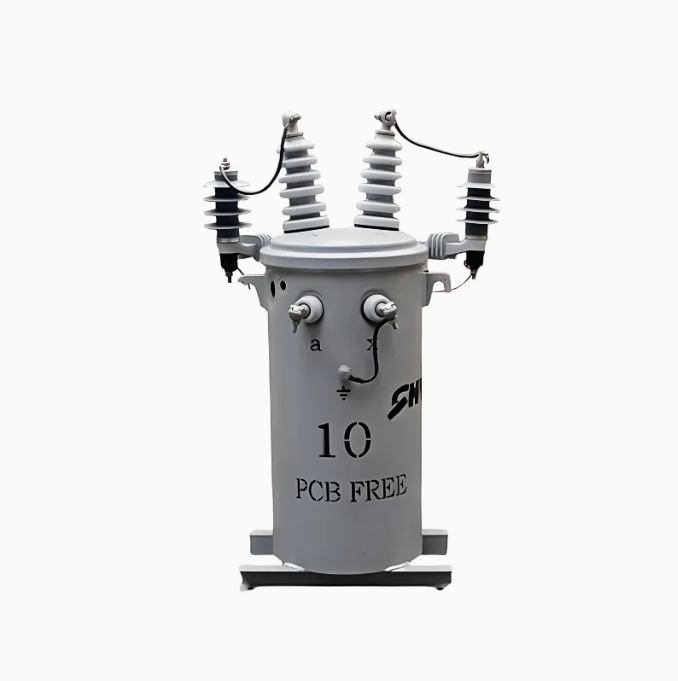
Do you have any knowledge about the radius of transformer power supply?
The core influencing factors of the power supply radius:
Voltage level: The voltage level of low-voltage distribution systems (such as residential electricity) is low (in China, 220V single-phase / 380V three-phase is commonly used), and voltage loss is more sensitive to distance. Therefore, the power supply radius is much smaller than that of high-voltage systems.
Load density: It refers to the power consumption per unit area (such as kW/km²).
Load-intensive areas (such as urban residential areas, commercial areas): Users are concentrated, so the power supply radius needs to be reduced (to avoid overload of a single Transformer), and usually the radius is smaller (such as 100-300 meters);
Load-sparse areas (such as rural areas, suburbs): Users are scattered, so the radius can be appropriately expanded (to reduce the number of transformers and reduce costs), but the voltage loss needs to be controlled, and usually the radius does not exceed 500 meters.
Wire specification (cross-sectional area): The thicker the wire (larger the cross-sectional area), the smaller the resistance, and the less power loss and voltage loss. The supported power supply radius is larger.
Allowable voltage loss: According to the "Design Code for Power Distribution Systems" in China, the allowable voltage loss of low-voltage distribution systems is usually no more than 5% (that is, the terminal voltage is not lower than 95% of the rated voltage, such as 220V terminal voltage is not lower than 209V). If it exceeds this range, it will cause the efficiency of electrical equipment (such as air conditioners, refrigerators) to decrease, the lifespan to shorten, and even failure to work properly.
Planning principles for power supply radius:
In grid design, determining the power supply radius should follow the principles of "load matching, quality priority, and economic rationality":
Load matching: The Transformer capacity should match the total load demand within the power supply area to avoid "overloading with insufficient capacity" (excessive capacity, waste of investment) or "insufficient capacity to handle large loads" (insufficient capacity, overload trip).
Quality priority: Prioritize ensuring that the terminal voltage meets the specification requirements, even during peak load periods (such as the peak period of air conditioning use in summer), the voltage loss should not exceed 5%.
Economic rationality: Under the premise of meeting the quality requirements, balance the number of transformers and the power supply radius - neither blindly reduce the radius (increasing transformer and line investment) nor randomly expand the radius (leading to increased line loss and maintenance costs).
In summary, the power supply radius of the transformer is a key parameter in grid planning, directly connecting the capacity configuration of the transformer, line design, and the electricity consumption experience of users. It needs to be dynamically optimized based on the actual scenario to achieve the "safe, reliable, and economic" power supply goal.