


The structure of the transformer core
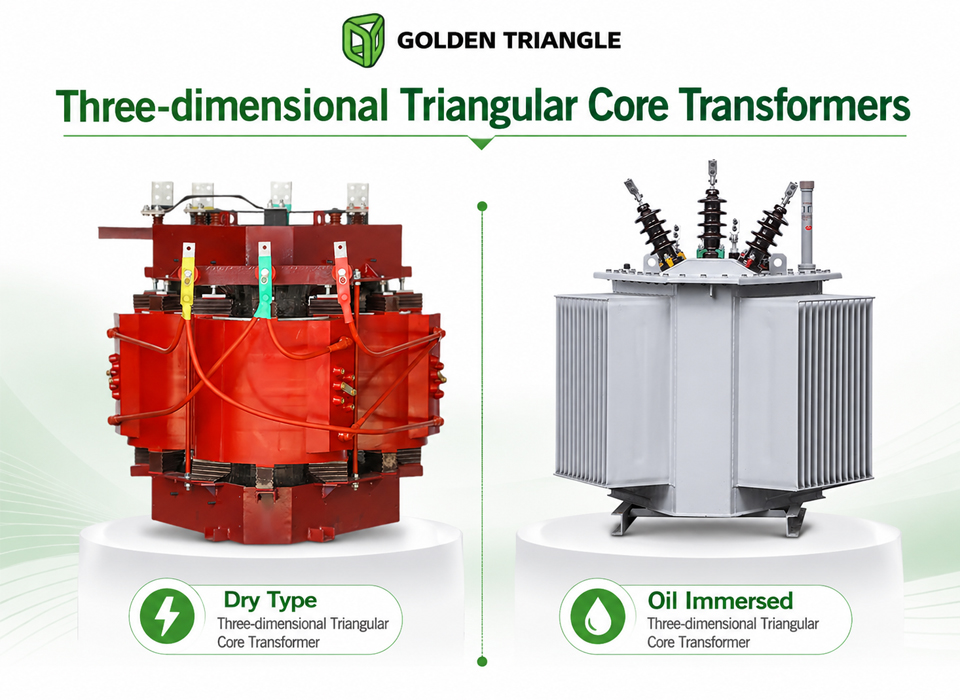
The Transformer core is the magnetic circuit core component of the transformer. Its function is to conduct alternating magnetic flux, achieve electromagnetic induction between the primary and secondary windings, and determine the key performance indicators such as no-load loss and excitation current of the transformer.
I. Core Structure of Transformer
The mainstream material for the transformer core is cold-rolled oriented silicon steel sheets. The silicon steel sheets contain approximately 2% to 4.5% silicon, which can reduce iron loss. The cold-rolled oriented design makes the grain direction consistent with the magnetic flux direction, significantly improving the magnetic conductivity. High-frequency transformers or small transformers may use ferrite cores, which have the characteristics of high magnetic permeability and low eddy current loss.
Basic components of the transformer core
Core column: The vertical part, used to accommodate the primary and secondary windings, is the main path for magnetic flux.
Yoke: The horizontal part, connecting the upper and lower ends of the core column, forms a closed magnetic circuit to prevent the leakage of magnetic flux.
Clamping structure: Including clamps, screws, pull plates, etc., used to fix the laminations of the core, preventing vibration during operation, and ensuring insulation treatment to avoid eddy current.
Core lamination method: The core is composed of thin silicon steel sheets (thicknesses of 0.23mm, 0.27mm, 0.3mm, etc.) that are staggeredly stacked. Insulating paint is applied between the laminations. Staggered stacking can reduce the gap air between the laminations and reduce magnetic resistance; thin silicon steel sheets can also suppress eddy current loss (eddy current loss is proportional to the square of the silicon steel sheet thickness). Common lamination joint forms include direct joints and inclined joints. Inclined joints have better magnetic circuit continuity and lower no-load loss.